When you're buying property in Israel from abroad, the mortgage process rarely feels simple. Time zones slow responses, document requests arrive in pieces, and one missing file can stall progress for days. A digital mortgage application process changes that by turning a fragmented, paper-heavy workflow into a structured system with clear steps, visible status, and faster movement from intake to approval.
For overseas buyers and immigrants, that structure matters more than convenience. It affects whether you can submit complete documents on time, respond to bank requirements quickly, and keep your purchase on track without relying on scattered emails, phone calls, and spreadsheets. In a market where timing, compliance, and coordination all matter, digitization is not just a nicer interface. It is better process control.
What the digital mortgage application process actually changes
A traditional mortgage journey often breaks down at the handoff points. A client sends documents by email. An advisor checks them manually. A missing signature is noticed late. A real estate agent waits for updates. The borrower asks for status, but no one has a single source of truth. Delays are rarely caused by one major issue. More often, they come from dozens of small administrative gaps.
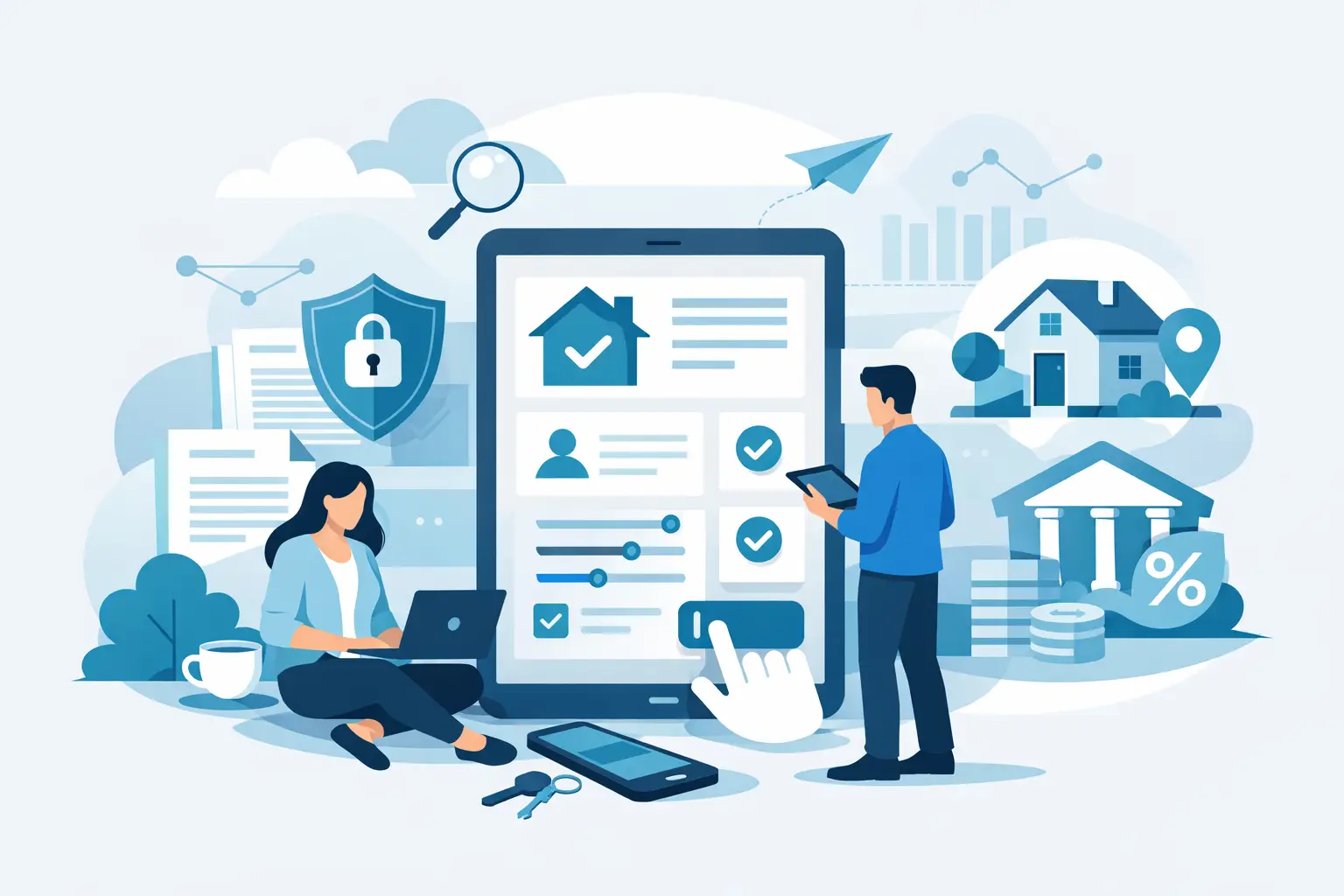
The digital mortgage application process addresses those gaps by centralizing intake, document collection, verification steps, status tracking, and communication. Instead of managing a mortgage file across multiple channels, the process moves through one controlled workflow. That means the borrower sees what is needed, the operator sees what is missing, and affiliates or stakeholders can stay aligned without constant follow-up.
This is especially useful for buyers outside Israel. Overseas borrowers often need to provide foreign income records, identity documents, bank statements, tax material, and translated paperwork. If those requirements are handled informally, confusion grows fast. If they are handled in a structured digital flow, the process becomes easier to monitor and easier to complete correctly.
How a digital mortgage application process works in practice
The first stage is intake. Instead of starting with a general inquiry and a long back-and-forth exchange, the borrower enters information through a guided digital form. This can include personal details, property information, residency status, income profile, and financing goals. The value here is not just speed. It is standardization. The right data is collected in the right format from the start.
Next comes document collection. This is where many mortgage files lose momentum. Borrowers send partial files, outdated statements, or unclear scans. A digital workflow reduces that friction by defining exactly which documents are required, assigning them to the application, and showing completion status in real time. Rather than asking, "Did you receive my passport copy?" the client can see whether it has been uploaded, reviewed, or still needs action.
After collection, automated checks can begin. Some checks validate completeness. Others flag inconsistencies, expired documents, or missing fields. This does not remove human review, and it should not. Mortgages involve judgment, bank policy, and case-specific nuance. But automation helps teams catch operational issues earlier, before they delay underwriting or offer preparation.
Then the file moves into assessment and offer preparation. At this stage, a structured platform helps operators organize data, generate documentation, and keep the application aligned with lender requirements. If multiple stakeholders are involved, such as an advisor, affiliate, borrower, and internal administrator, each role can work from the same application record instead of maintaining separate versions of the truth.
The final stages involve submission, tracking, and communication. This part matters because borrowers do not just want a mortgage decision. They want visibility. They want to know what stage the file is in, what is blocking progress, and what action is expected next. A digital process makes those updates part of the workflow rather than an extra manual task.
Why transparency matters as much as speed
Speed gets attention, but transparency is often the real advantage. A faster process still creates stress if the borrower has no idea what is happening. For overseas buyers, uncertainty feels worse because they are not physically present to chase documents, visit offices, or speak directly with each party involved.
A transparent digital experience reduces that pressure. When the borrower can log in, review outstanding tasks, see progress, and receive structured updates, the mortgage journey feels controlled instead of reactive. That control also improves behavior. Clients are more likely to upload the correct documents promptly when requirements are clearly presented and easy to follow.
From an operations perspective, transparency reduces repetitive communication. Teams spend less time answering status questions and more time moving files forward. Real estate agents and financial advisors also benefit because they can stay informed without constantly interrupting the process for updates. That is a major advantage in competitive transactions, where confidence and timing can affect whether a deal stays alive.
Where digital mortgage workflows still depend on people
Not every part of a mortgage should be automated. Borrowers with overseas income, multiple citizenships, unusual asset structures, or language barriers often require context-sensitive handling. A platform can organize the work, but expertise is still needed to interpret documentation, resolve exceptions, and prepare a file that matches lender expectations.
That is why the strongest digital mortgage application process combines automation with operational oversight. The system should manage intake, track tasks, enforce completeness, and streamline communication. But it also needs room for case management, manual review, and exception handling. If a platform is too rigid, complex files get stuck. If it is too loose, teams fall back into manual chaos.
This balance matters in Israel's mortgage environment, where overseas and immigrant borrowers may not fit a simple local employment profile. The process has to be standardized enough to move efficiently and flexible enough to handle real cases.
What borrowers should look for in a digital mortgage experience
A useful digital process does not just look modern. It removes specific sources of delay. Borrowers should be able to submit information once, upload documents securely, track progress, and understand what comes next. If the platform still relies on email chains for critical steps, the digital layer is only partial.
Good workflow design also separates roles clearly. The client should have a dashboard that is simple and action-focused. Internal teams should have controls for validation, messaging, status management, and document handling. Affiliates should have appropriate visibility without adding noise or risk. When those roles are mixed together poorly, the process becomes harder to manage, not easier.
This is where a platform-led approach stands out. Systems built around mortgage workflows, rather than generic file sharing, can handle operational details that actually affect turnaround time. That includes configurable rules, structured document templates, stage-based tracking, and communication tied directly to the application record. Amortis is built around that operational model, which is why it fits buyers and partners who need visibility without losing control.
Why this matters for real estate agents and affiliates too
The mortgage application is not just a borrower issue. It affects the entire transaction. If a buyer cannot move quickly or prove financing progress, the real estate deal becomes less certain. For agents working with overseas buyers, that risk is even higher because distance adds friction.
A digital workflow helps agents and affiliates stay closer to the financing process without taking it over. If a mortgage can be initiated, reviewed, and tracked through a structured platform, the agent has more confidence that the buyer is progressing toward approval. That supports faster decision-making and reduces the chance that a client disappears into a slow, opaque financing path.
There is also a relationship advantage. When an agent or advisor can help connect the buyer to a clear and well-managed mortgage journey early, they strengthen trust and reduce drop-off. In practical terms, that means fewer missed updates, fewer avoidable delays, and a stronger chance of keeping the transaction moving.
The real value is process control
The digital mortgage application process is not about replacing people with software. It is about replacing confusion with structure. For overseas buyers purchasing in Israel, that structure creates a practical advantage: better document handling, clearer communication, faster issue detection, and more visibility from first intake to final approval.
And for the teams supporting those buyers, the benefit is even more operational. A controlled workflow reduces rework, standardizes file quality, and keeps every participant aligned around the same application status. That is what moves a mortgage from stressful and fragmented to organized and actionable.
If you're applying from abroad, the best mortgage experience is not the one with the most features. It's the one that makes every next step clear.